
Published: Feb. 3, 2026
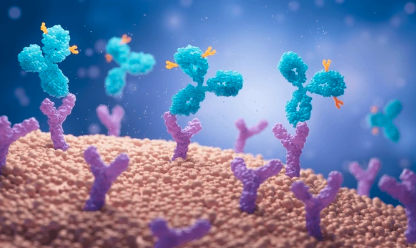
Summary: Lock conjugation is a simple and selective one-step reaction between interfacial lysine (Lys) and glutamate (Glu) or aspartate (Asp) sidechains, forming stable bonds and enabling the precise labelling of IgG antibodies. Compared to traditional methods, Lock conjugation is less disruptive to antibody binding and stability, offers precision for multiple compounds and probes, and, most importantly, can be carried out on fully native antibodies, without the need for mutations.
Applications
- Simple and stable replacement for secondary antibodies that enables labeling in a single step
- Antibody-drug conjugates (ADCs) for targeted cancer therapy and immunotherapies, including labeling of patient antibodies
- Site-specific labeling of antibodies with drugs, radionuclides, or imaging probes
- Flow cytometry, immunostaining, and live-cell/whole-animal bioimaging
- Structural biology and protein-protein interaction analysis, including cryo-EM and crystallography
Advantages/Benefits
- Enables precise, controlled, stable labeling of antibodies with 1, 2, or 4 probes
- Preserves antibody stability and binding activity for reliable performance
- Compatible with a variety of probes, including organics (drugs, fluorophores), nanoparticles, and lipid micelles
- One-step aqueous reaction that doesn’t require antibody mutagenesis or introduction of synthetic components
Background
Antibody conjugates are important for biotechnology, supporting imaging, immunotherapies, and targeted drug delivery. Traditional labeling methods, like random lysine modification or partial disulfide reduction, often create inconsistent products that weaken antibody binding and stability. While more precise approaches exist, they usually require protein engineering, synthetic metabolites, or complex enzymatic systems, making them less practical for human-derived antibodies. There is a need for simple and precise Ab labelling strategies that can be used in fundamental biology, biotechnology, and medicine.
Technology Overview
Researchers at Berkeley Lab have developed “lock conjugation,” a one-step method that forms stable bonds between proteins at natural Lys/Glu or Lys/Asp sites. In antibodies, the small binding protein GB1 was covalently “locked” to the Fc domain, creating a reliable platform for attaching dyes, nanoparticles, micelles, or other functional probes. By modifying GB1 and adjusting reaction conditions, antibodies were consistently labeled with 1, 2, or 4 probes at defined positions. This precision reduces variability, preserves antibody stability, and ensures full functionality. The result is highly uniform antibody conjugates that work reliably in both mammalian cell cultures and live animal applications, supporting uses from imaging and diagnostics to targeted therapies. Lock chemistry requires just a single reagent in aqueous buffer. Compared to traditional methods, lock conjugation is simpler to implement and offers significantly greater precision.
To date, a bacterial protein involved in the research has not been tested for human immunogenicity. Research is ongoing.
Development Stage
TRL 4: System validation in lab environment
For More Information:
https://pubs.acs.org/doi/full/10.1021/jacs.5c20725
Principal Investigator
Status
Patent pending
Opportunities
Available for licensing or collaborative research
