
Published Aug, 3, 2026
Summary:
Alpha particles trigger deuterium fusion in metal hydrides, generating low-cost, controllable radiation and heat.
Applications:
- Low cost sources of neutrons and protons for industrial materials analysis
- Oil and gas well logging
- Remote heat and power generation
Advantages/Benefits:
- Low cost, compact heat and power source (at the Watt per gram scale)
- No high voltage neutron generators needed
- Radiation can be turned on and off, enhancing safety and flexibility
- Potentially scalable to kW and MW power levels with further development
Background:
Compact, efficient, and controllable sources of radiation are crucial for advanced materials analysis and portable power generation in diverse fields. There is a significant demand for such technologies, especially for remote or harsh environments.
Existing radiation sources are often costly, bulky, lack precise control over output, or require complex, high-voltage equipment. Traditional radioactive sources also pose challenges due to their continuous emission and limited efficiency.
Technology Overview:
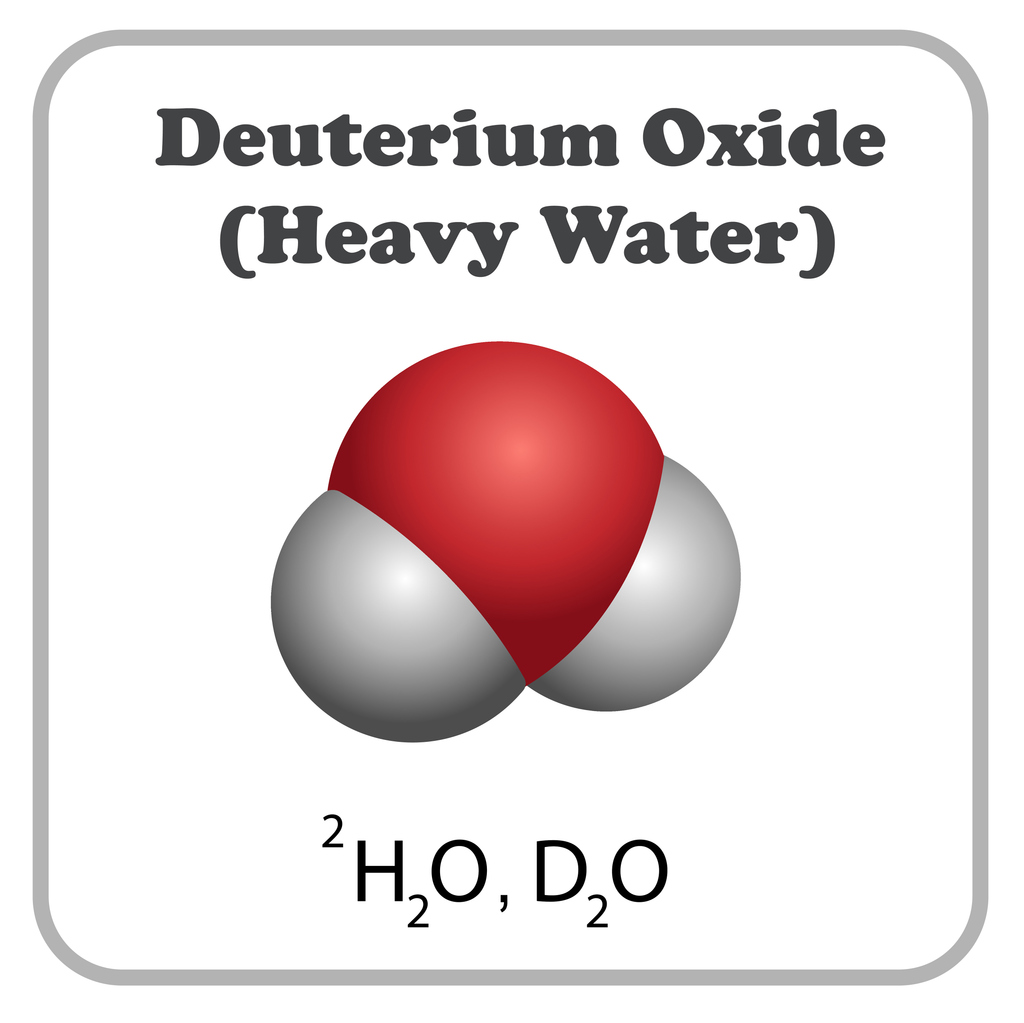
Scientists at Berkeley Lab and UC Davis have developed a method to generate radiation and heat through deuterium-deuterium (d-d) fusion reactions within metal hydrides. Deuterium atoms are loaded into the metal lattice , where the metal’s electronic structure provides significant electron screening, lowering the fusion barrier. Alpha particles from radioisotopes then collide, depositing energy that transiently triggers and enhances d-d fusion at ambient temperatures, emitting 3 MeV protons and 2.45 MeV neutrons.
This technology offers low cost and controllability, allowing radiation output to be turned on or off by managing deuterium loading, unlike continuous radioactive sources (such as AmBe). It requires no high voltage or complex accelerator equipment, relying on enhanced fusion rates due to electron screening, a well-understood physical phenomenon. This compact and scalable approach offers significantly higher neutron yields per alpha particle than traditional sources. The system can produce approximately 1 watt per gram of heat from about 10^12 alphas decays and fusion reactions per second.
The technology produces radiation suitable for advanced materials analysis techniques such as proton-induced X-ray emission (PIXE) and prompt gamma neutron activation analysis (PGNAA). Compact and scalable design supports applications ranging from portable radiation sources to potential future power generation.
Development Stage:
Proof of concept
Inventors:
- Micah Karahadian, UC Davis
- Matthew Colborne, Berkeley Lab
- Arun Persaud, Berkeley Lab
- Charlie Johnston, UC Davis
- Mauricio Ayllon Unzueta, Berkeley Lab
- Jeremy Munday, UC Davis
- Thomas Schenkel, Berkeley Lab
Status:
Patent pending
Opportunities:
Available for licensing or collaborative research
For More Information:
Karahadian M. et al. Enhanced nuclear fusion in the sub-keV energy regime. Nature Communications, 18 July 2026. https://doi.org/10.1038/s41467-026-74421-1
Biron, L. “When It Comes to Fusion, Materials Matter.” Berkeley Lab Newscenter. July 23, 2026. https://newscenter.lbl.gov/2026/07/23/when-it-comes-to-fusion-materials-matter/
