Applications:
- Coating applications for autonomous vehicle guidance
- Coating for road structures and signs and road user apparel
- Building materials and facades
Advantages/Benefits:
- Multi-layer coating structure with both IR reflective and fluorescent pigments
- Improved IR reflection capable of producing a detectable signal
- Enhanced solar reflectance and thermal management
- Improved object detection for autonomous vehicles
Background:
Dark-colored coatings on building materials, vehicles, and other objects often absorb infrared (IR) radiation, creating higher energy costs and increased temperatures. Additionally, as autonomous vehicles rise in popularity, it is becoming increasingly important that the vehicles and other objects in a vehicle’s surroundings include markings or coatings that are detectable by a sensor mounted on another vehicle. Coatings that can provide both aesthetically pleasing dark colors with reduced IR absorbance, as well as improved detectability for sensors, are needed.
Technology Overview:
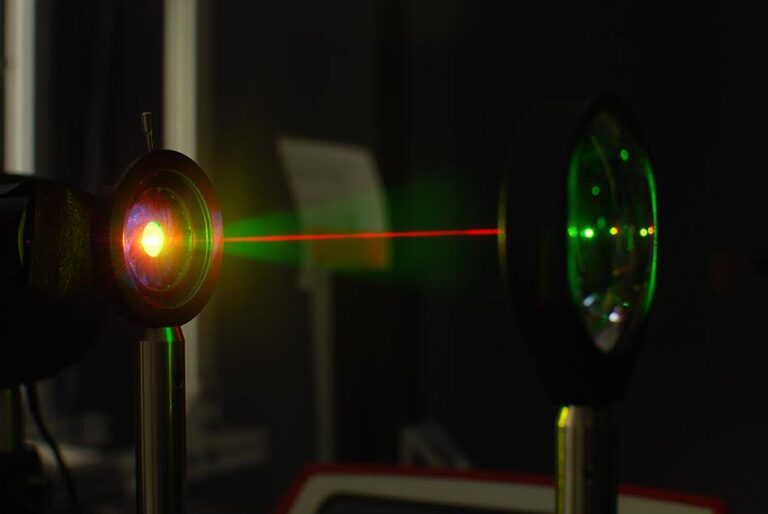
Scientists at Berkeley Lab and PPG Industries, a leading paint and coating manufacturer, have jointly developed a multi-layer coating which contains both IR reflective and fluorescent properties to increase solar reflectance, visibility, and detection. The layers of the coating include a film-forming resin, and an infrared fluorescent pigment which is different from the reflective pigment.
When exposed to fluorescence-exciting radiation, the coating has a greater effective solar reflectance (ESR) compared to other coatings that do not contain the fluorescent pigment. Additionally, when applied to an autonomous vehicle, sensors can detect the fluorescence emitted from the coating when the coating is exposed to fluorescence-exciting radiation, such as headlights from another vehicle. The coating can improve temperature regulation, improve sensor detectability, and be applied as a single layer or a multi-layer coating. It is useful to a wide range of applications, such as vehicles, building infrastructure, and more.
Development Stage:
TRL 4 – Component and/or system validation in laboratory environment
Principal Investigator:
- Paul Berdahl
Status:
2017-134:
US Patents – 11702551, 11584860
2017-135:
US Patent – 11479677
Both patented in several other countries as well
Related Technologies:
Opportunities:
Available for non-exclusive licensing
